Sunday, April 28, 2013
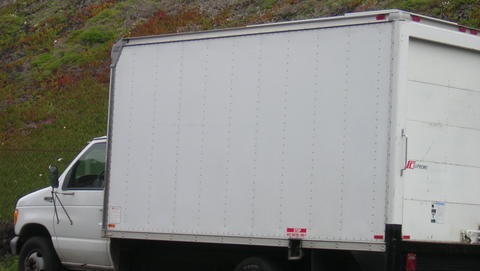
Cat on a cold van roof
Well that is the first scare I've had in a very long time. Middle of the night, dead silent, quiet and very safe suburban neighborhood. I heard a thump, and the van shook. I heard scratching and tapping on my van. I look out the window, and see nothing. What? Then I hear more banging on the metal. I do my usual bellowing "HEY!!" bark. And I see a cat quickly climb off the roof of my van, down the windsheild, onto the hood, and leap to the ground, meowing the whole time. Great. I just yelled my fool head off... at a cat.

Thursday, April 25, 2013
Tie rod ends and ball joints
My tie rod ends are shot again. WTF? I just redid my whole front end in September: ball joints, tie rods, brakes. And now my steering is rattling around, and my van drifting all over the road again. I think some nasty potholes and road seams around where I live are the culprit. This sucks. Money's mostly dried up for me, as I'm trying to make the transition from doing hourly contract work to attempting to get some entrepreneurial businesses off the ground. I'm gambling building a business that'll make money for me while I sleep. But it's nowhere near ready to launch yet. I'm probably going to be $200 in the hole for parts and alignment to fix this one-- not a huge problem, but not what I wanted right now either. Grr.
Friday, March 22, 2013
Solar electrical statistics/charts
I put up some statistics and charts on my solar electrical system performance here, if anyone is interested.
Some explanation. The dip on 12/8/12 was due to me replacing the dead battery bank. That was my 420Ah huge bank that was too big for my 210W panel array to charge up in the wintertime. I replaced it with a smaller 210Ah battery bank.
The other dip around the end of December is when I stupidly disconnected the panels-- in the rain-- attempting to check the wiring. Turns out the wiring was fine; winter just sucks here for solar.
The dip in Feburary was due to me forgetting to save the data out of the SunSaver. It only keeps 30 days of data. I have to manually download it every 30 days. If I forget to do that, I get a data gap. Oh well.
I was going to fancy-up the charts some more and play with Flot, but I'm busy with other work at the moment. Maybe sometime soon.
Some explanation. The dip on 12/8/12 was due to me replacing the dead battery bank. That was my 420Ah huge bank that was too big for my 210W panel array to charge up in the wintertime. I replaced it with a smaller 210Ah battery bank.
The other dip around the end of December is when I stupidly disconnected the panels-- in the rain-- attempting to check the wiring. Turns out the wiring was fine; winter just sucks here for solar.
The dip in Feburary was due to me forgetting to save the data out of the SunSaver. It only keeps 30 days of data. I have to manually download it every 30 days. If I forget to do that, I get a data gap. Oh well.
I was going to fancy-up the charts some more and play with Flot, but I'm busy with other work at the moment. Maybe sometime soon.
Wednesday, January 30, 2013
The Watts of Spring
Spring is here, the rains have stopped, and my whole winter-electricity emergency is over.
I'm sitting here at 9am and getting 3A of charging from the panels. Used 10Ah last night so I'll have my batteries recharged well before noon, with plenty of sun to spare for whatever.
The sun just cleared the mountains, and already the SunSaver MPPT says the panels are putting out 50W of power as of the last sweep.
That whole panic/emergency/anxiety/expense I went through over the winter, appears to have been for nothing.
Technically we can still get rain here for a few more months, with some minor rain straggling on for longer, but it's been 100% sunny and bright for weeks now. I now have more than enough juice to spare. I can work, and not worry.
I can probably even put the genset into storage, or maybe even flip it if I needed cash. Since I'm working right now, I'd rather keep the unit as a backup anyway, so I'll hold on to it.
If I decide to stay at a park/campsite somewhere, they're always shaded in, so I'll have the generator for that.
And, I'm ready for next winter.
I'm sitting here at 9am and getting 3A of charging from the panels. Used 10Ah last night so I'll have my batteries recharged well before noon, with plenty of sun to spare for whatever.
The sun just cleared the mountains, and already the SunSaver MPPT says the panels are putting out 50W of power as of the last sweep.
That whole panic/emergency/anxiety/expense I went through over the winter, appears to have been for nothing.
Technically we can still get rain here for a few more months, with some minor rain straggling on for longer, but it's been 100% sunny and bright for weeks now. I now have more than enough juice to spare. I can work, and not worry.
I can probably even put the genset into storage, or maybe even flip it if I needed cash. Since I'm working right now, I'd rather keep the unit as a backup anyway, so I'll hold on to it.
If I decide to stay at a park/campsite somewhere, they're always shaded in, so I'll have the generator for that.
And, I'm ready for next winter.
Friday, January 4, 2013
Gasoline
I finally gave in and bought a Honda EU2000i generator.
So, after 5 years of mostly successfully banishing gasoline from my life, I'm back on the stuff again, at least partially, and minimally, and perhaps even temporarily.
I needed it for rainy winter days like today, when the most my solar panels could put out was 2A, and only for a limited number of hours (sun sets at 5pm here this time of year), and I have a refrigerator that wants 5-10Ah/day and I need to run my laptop for 4-8 hours today and tonight at 1A/h, and the most sunlight I can get out of my 200W array in the rain seems to be 5-10Ah, given the hours of "daylight" (more like rain-dark) available.
Despite my intense dislike of gasoline, and the environmental destruction and wars required in order to obtain it, and its volatility and flammability and odor, and its short shelf life, this generator makes dealing with the stuff almost pleasant. It's a very well engineered product. Runs 4-9 hours on a gallon of gas, is light, quiet, and stows away nicely. It'll get me through the winter for sure.
It's a nice unit, well-regarded, with its own thriving community of users-- and hackers. I've seen posts by guys building boxes for it, mounting it in RV's, adding external exhaust pipes, and doing mods like adding an hourmeter for maintenance tracking, adding an external fuel cell for months of operation, or-- most to my interest-- a mod to make it run on propane. Propane isn't much better environmentally than gasoline, but it sure does stay longer, and I could run propane inside to my kitchen and mount my stove permanently, add a heater, and run the genset, all off of the same fuel source, which is appealing.
I ran it for a half-hour today, in the rain, and it seemed pretty happy. It put out enough juice to bring my batteries up to full charge, after which my solar panels more or less trickle-charged them for a few hours afterwards.
I will have to mount the generator somewhere, hidden, and soon. I only really need it in the rain; it's pretty well weatherproof, but running outside to deal with it in the rain is not fun, and laying a big 110V cable out in wet weather isn't so great either. Also, it feels weird having it out: it's a big red obvious theft waiting to happen. Not so much in a paid park where RVers congregate, or on a campsite at a campground-- I can lay it on the ground a few feet away from my van, with a big yellow cable running to it, and run the thing for a couple hours without looking too badly out of place, worrying about it getting ripped off, or making any enemies. But I sure can't run it in the suburbs in stealth mode, and I'm never going to take it out when in the city, it'll be gone in minutes.
Then again, I don't really need it in the city or suburbs; I have some places to plug in to get 110V for a few hours a day in a pinch if needed. The purpose of this unit is to keep my batteries from getting killed when I'm away from civilization in the rain in winter, or when I'm at my favorite campgrounds in the summer which tend to be very shaded. And I think this will do very well for those purposes.
UPDATE: A day later, a scruffy guy on a bicycle who is obviously living on the beach, came by and said "Hey, you can pump up your tires anywhere!". Obviously mistaking the generator for a compressor, and he seemed pretty harmless, and this is a safe-ish spot, but still, within the first day, someone with the Means, Motive, and Opportunity to rip me off, noticed this conspicuously noisy red "please steal me" object. NOT COOL. If he noticed it, everyone who may be a threat to me did too. Time to get a box, now.
So, after 5 years of mostly successfully banishing gasoline from my life, I'm back on the stuff again, at least partially, and minimally, and perhaps even temporarily.
I needed it for rainy winter days like today, when the most my solar panels could put out was 2A, and only for a limited number of hours (sun sets at 5pm here this time of year), and I have a refrigerator that wants 5-10Ah/day and I need to run my laptop for 4-8 hours today and tonight at 1A/h, and the most sunlight I can get out of my 200W array in the rain seems to be 5-10Ah, given the hours of "daylight" (more like rain-dark) available.
Despite my intense dislike of gasoline, and the environmental destruction and wars required in order to obtain it, and its volatility and flammability and odor, and its short shelf life, this generator makes dealing with the stuff almost pleasant. It's a very well engineered product. Runs 4-9 hours on a gallon of gas, is light, quiet, and stows away nicely. It'll get me through the winter for sure.
It's a nice unit, well-regarded, with its own thriving community of users-- and hackers. I've seen posts by guys building boxes for it, mounting it in RV's, adding external exhaust pipes, and doing mods like adding an hourmeter for maintenance tracking, adding an external fuel cell for months of operation, or-- most to my interest-- a mod to make it run on propane. Propane isn't much better environmentally than gasoline, but it sure does stay longer, and I could run propane inside to my kitchen and mount my stove permanently, add a heater, and run the genset, all off of the same fuel source, which is appealing.
I ran it for a half-hour today, in the rain, and it seemed pretty happy. It put out enough juice to bring my batteries up to full charge, after which my solar panels more or less trickle-charged them for a few hours afterwards.
I will have to mount the generator somewhere, hidden, and soon. I only really need it in the rain; it's pretty well weatherproof, but running outside to deal with it in the rain is not fun, and laying a big 110V cable out in wet weather isn't so great either. Also, it feels weird having it out: it's a big red obvious theft waiting to happen. Not so much in a paid park where RVers congregate, or on a campsite at a campground-- I can lay it on the ground a few feet away from my van, with a big yellow cable running to it, and run the thing for a couple hours without looking too badly out of place, worrying about it getting ripped off, or making any enemies. But I sure can't run it in the suburbs in stealth mode, and I'm never going to take it out when in the city, it'll be gone in minutes.
Then again, I don't really need it in the city or suburbs; I have some places to plug in to get 110V for a few hours a day in a pinch if needed. The purpose of this unit is to keep my batteries from getting killed when I'm away from civilization in the rain in winter, or when I'm at my favorite campgrounds in the summer which tend to be very shaded. And I think this will do very well for those purposes.
UPDATE: A day later, a scruffy guy on a bicycle who is obviously living on the beach, came by and said "Hey, you can pump up your tires anywhere!". Obviously mistaking the generator for a compressor, and he seemed pretty harmless, and this is a safe-ish spot, but still, within the first day, someone with the Means, Motive, and Opportunity to rip me off, noticed this conspicuously noisy red "please steal me" object. NOT COOL. If he noticed it, everyone who may be a threat to me did too. Time to get a box, now.
Friday, December 21, 2012
Working the demand side
Well it is rainy and dark on the solstice, but I'm doing OK on electricity.
I climbed up on the roof, and it looks like my connections are all plenty solid. Unfortunately I got caught in the rain and had to redo the work once it dried off a few days later. But all is well up there. I see way less amp-hours of charging coming from it because.... it's winter, in the far reaches of the Northern Hemisphere, is why. Even in the heat of summer I'll never get full power from these unless I drive to Mexico or something.
The simple fact is that I don't have enough electricity to run even a 1A @12V notebook in winter, no matter what I do! So worked the demand side. I got one of these Android tablets with a keyboard. It's slow, and I really hate not having a real computer, but I've got it set up so that I can at least read, and surf the internet, watch videos, and even do some work (slowly). The advantage of the tablet? It's ARM-based and uses about 200mA @ 12V. That's right: about 1/4 the consumption of an Intel-based notebook. This one has a spare battery in the keyboard, and gets 9+ hours of use without even having to plug it in to my house batteries! Perfect for winter.
A little side note is that the fast-recharge capability of the tablet is triggered by USB3.0 voltages: give it anything over 11V and it'll bulk recharge quickly. So I hacked up a cable that was female USB on one side, and my Andersons (12v house system) on the other. Cheap, and effective, I just have to remember never to plug any normal USB 2.0 devices into this little cable, or they'll shut off (circuit breaker) or get fried (fuse)-- USB 2.0 expects 5V.
I also found out that I have to bulk charge these batteries using my 75A converter every few days, for at least a half hour to 2.5 hours or so. That sucks; it means I have to find places to plug in. So I'll have to buy a gasoline or propane genset. I don't like dealing with either gas or propane, neither the pollution nor the noise, but gas is so easy to find, and gas generators can be found for reasonable prices. The one I want is the Honda EU2000i. I'd get the EU1000i but my converter will pull 1300W when the batts are really low, and so I need at least a 1500W genset, which in Honda land means I have to get the 2000W one.
My holiday is going well though, reading and studying mostly, and getting used to the tablet. This old dog does not want to learn the new tricks, so I'm basically setting up the tablet as much like a laptop as I can. So far so good.
Wow, the tablet is a Google Android, running Google Chrome, and it absolutely cannot cope with Google Blogger's web interface. Come on guys, get it together, will ya?
I climbed up on the roof, and it looks like my connections are all plenty solid. Unfortunately I got caught in the rain and had to redo the work once it dried off a few days later. But all is well up there. I see way less amp-hours of charging coming from it because.... it's winter, in the far reaches of the Northern Hemisphere, is why. Even in the heat of summer I'll never get full power from these unless I drive to Mexico or something.
The simple fact is that I don't have enough electricity to run even a 1A @12V notebook in winter, no matter what I do! So worked the demand side. I got one of these Android tablets with a keyboard. It's slow, and I really hate not having a real computer, but I've got it set up so that I can at least read, and surf the internet, watch videos, and even do some work (slowly). The advantage of the tablet? It's ARM-based and uses about 200mA @ 12V. That's right: about 1/4 the consumption of an Intel-based notebook. This one has a spare battery in the keyboard, and gets 9+ hours of use without even having to plug it in to my house batteries! Perfect for winter.
A little side note is that the fast-recharge capability of the tablet is triggered by USB3.0 voltages: give it anything over 11V and it'll bulk recharge quickly. So I hacked up a cable that was female USB on one side, and my Andersons (12v house system) on the other. Cheap, and effective, I just have to remember never to plug any normal USB 2.0 devices into this little cable, or they'll shut off (circuit breaker) or get fried (fuse)-- USB 2.0 expects 5V.
I also found out that I have to bulk charge these batteries using my 75A converter every few days, for at least a half hour to 2.5 hours or so. That sucks; it means I have to find places to plug in. So I'll have to buy a gasoline or propane genset. I don't like dealing with either gas or propane, neither the pollution nor the noise, but gas is so easy to find, and gas generators can be found for reasonable prices. The one I want is the Honda EU2000i. I'd get the EU1000i but my converter will pull 1300W when the batts are really low, and so I need at least a 1500W genset, which in Honda land means I have to get the 2000W one.
My holiday is going well though, reading and studying mostly, and getting used to the tablet. This old dog does not want to learn the new tricks, so I'm basically setting up the tablet as much like a laptop as I can. So far so good.
Wow, the tablet is a Google Android, running Google Chrome, and it absolutely cannot cope with Google Blogger's web interface. Come on guys, get it together, will ya?
Thursday, December 6, 2012
Dark for the first time in over 3 years
Well the van went dark today with no electricity, for the first time since Friday, March 20th, 2009. That was apparently the date that I switched over from my old PWM controller to my new MPPT controller, and that's the date it had stored in memory as "the beginning of time". It was very strange to not have electricity! I'd forgotten what that felt like.
I did this because, after over 4 years, my Concord Lifeline GP4 batteries finally had enough abuse for one lifetime, and I replaced them. That's not a great duty cycle for these things, but I really did not treat them well-- deep cycling them a few times and not charging them back up promptly. It had gotten to the point where, last week, a couple days of rain and not enough hours of sunlight (only 9Ah of charge for the full day!!) had worn the batteries down to 12.1V by end of night. I've been studying the battery status for the last 3 months, since I've had the PC interface for the Sunsaver MPPT.
I use, on average, 20Ah-30Ah a day, depending on how much work I have. About 10Ah of that is my refrigerator, the rest of it is my computer. If I travel somewhere hot in the summer I might use much more, due to running the fan (4A at full speed, all day and night), but there's usually enough sun to recover.
So I swapped out the old batteries with two new, but smaller, Lifeline batteries, so now I have only 250Ah total capacity, instead of the 420Ah I used to have. A little math indicates that I can run behind on charge for only a few days now, then I have to charge them up, otherwise I'll be making the same mistake again. I have less margin now, but, better diagnostics too, and I own a converter, which I didn't have for years..
For wintertime, I'm thinking I should either get another solar panel to bump up my charging capacity, or maybe get a Honda generator. But both are costly. In the meantime, I've got a few places I can plug in to shore power to run my converter in the winter to charge up. Or, if I'm travelling, I can find an RV park with hookups and pay the $50 or whatever they want for that. Still cheaper than a generator or new panel.
I also could get one or two more batteries of the same make/model, and hook them up in parallel, to be able to go longer before recharges. Lots of options!
So the new batteries are in, and I had to change some of the wiring and hack up some different mounting in my battery box too. I took pictures too; maybe I'll post them in the Vandweller's list photo archives.
I also got rid of that insipid Cobra inverter, the one that made so much noise. I only really used it for my laser printer, and then it beeped and complained when the printer warmed up about the load being too high. I might just run that on shore power only, or with a generator if I pick one up. I have two smaller-- and silent!-- 150W inverters I could use for any small things I might need to run. But these batteries were expensive, and I'm going to make some of that back by selling off stuff I hardly ever use and could do without, like the inverter.
I did this because, after over 4 years, my Concord Lifeline GP4 batteries finally had enough abuse for one lifetime, and I replaced them. That's not a great duty cycle for these things, but I really did not treat them well-- deep cycling them a few times and not charging them back up promptly. It had gotten to the point where, last week, a couple days of rain and not enough hours of sunlight (only 9Ah of charge for the full day!!) had worn the batteries down to 12.1V by end of night. I've been studying the battery status for the last 3 months, since I've had the PC interface for the Sunsaver MPPT.
I use, on average, 20Ah-30Ah a day, depending on how much work I have. About 10Ah of that is my refrigerator, the rest of it is my computer. If I travel somewhere hot in the summer I might use much more, due to running the fan (4A at full speed, all day and night), but there's usually enough sun to recover.
So I swapped out the old batteries with two new, but smaller, Lifeline batteries, so now I have only 250Ah total capacity, instead of the 420Ah I used to have. A little math indicates that I can run behind on charge for only a few days now, then I have to charge them up, otherwise I'll be making the same mistake again. I have less margin now, but, better diagnostics too, and I own a converter, which I didn't have for years..
For wintertime, I'm thinking I should either get another solar panel to bump up my charging capacity, or maybe get a Honda generator. But both are costly. In the meantime, I've got a few places I can plug in to shore power to run my converter in the winter to charge up. Or, if I'm travelling, I can find an RV park with hookups and pay the $50 or whatever they want for that. Still cheaper than a generator or new panel.
I also could get one or two more batteries of the same make/model, and hook them up in parallel, to be able to go longer before recharges. Lots of options!
So the new batteries are in, and I had to change some of the wiring and hack up some different mounting in my battery box too. I took pictures too; maybe I'll post them in the Vandweller's list photo archives.
I also got rid of that insipid Cobra inverter, the one that made so much noise. I only really used it for my laser printer, and then it beeped and complained when the printer warmed up about the load being too high. I might just run that on shore power only, or with a generator if I pick one up. I have two smaller-- and silent!-- 150W inverters I could use for any small things I might need to run. But these batteries were expensive, and I'm going to make some of that back by selling off stuff I hardly ever use and could do without, like the inverter.
Friday, November 30, 2012
And time marches on
I went in to Home Depot today to buy some RJ45 jacks to re-terminate a cable where the tab broke off, and I realized something wonderful: it's probably been YEARS since I last stepped foot in a Home Depot!
I mean, I used to live in that place. Construction of my van was my full-time job. Now, it's been years that I've been able to enjoy the fruits of my work, and not have to work so hard.
This may be a very mundane thing for normal people: isn't it always normal that when you work on something, and finish it, then you get to enjoy it, and not work on it at all (or not so much)? Not for me, though, this is a new thing. I had some kind of strange mental problem where I could not ever trust that my effort would be rewarded. Which created an even stranger mental problem where I could never finish a project (what's the point?), and thus never realized that finishing a project is good because then I get to enjoy it. So it's very nice to have a feeling of accomplishment, to have made something that I get to keep afterwards.
Though, work really is endless anyway, in the long run. Example: a few months ago I did some massive and expensive van maintenance. It turns out I was an idiot and didn't grease the fittings on my tie rod ends or ball joints. I was an even bigger idiot and didn't get an alignment for years, but replaced my front tires with new ones last year, without getting an alignment. As a result, my tires were chewed up, and my entire front end was a mess. I had to replace a very expensive tie rod end and all 4 ball joints. Guess what? The special ball joint press tool you can borrow from Kragen doesn't work on E-series vans. I had to run to the plumbing store to get pipe nipples to hack the thing to get it to work. While I had the calipers hanging there, I also replaced my front brake pads and flushed the system too. But that got all that done, before the rainy season started, and all is well.
Speaking of rainy season, I discovered I have a nasty rain leak somewhere in the seam between the box and the cab. It's ugly. I squirted a bunch of Parr-Bond in there years ago, but it seems to not have helped. So I'll have to chase that down.
So now I'm mostly working on my own projects, and working for money. I replaced an old netbook with a newer notebook, since my work really requires it (and websites have gotten so bloated with Javascript that even websurfing or buying stuff online was impossible anymore). My old netbook lasted me exactly 4 years, so that's a pretty good run. My new one has sufficient guts that I should be able to make it last similarly long.
I did have to replace my 12v-19v converter though, it couldn't handle the new netbook. The new converter seems more efficient and hopefully will last longer. During the period after the old converter died and before the new one arrived in the mail, I bought a small 110v inverter and removed it's irritating fan, replacing the heat sink with a massive aluminum heatsink from an old PC. That was a fun hack. It turns out the fan on my 2500W inverter is so ridiculously loud that using it is simply not an option. At all. For anything. It's just sitting there. I may use it to run my laser printer from time to time. But my little hacked-together 110v (150W) inverter will have to do in case I need 110V for anything else in a pinch.
So that's my world. I just wasted most of the evening trying to get a silly bluetooth module to work, and failed. I was intending to use it to connect to my SunSaver to monitor battery, and for some other projects. But it appears to be non-functional. Or maybe it just needs more beating than I feel like giving it right now. I'd rather be doing something more fun, or more lucrative, or both.
Or more cathartic, like updating this blog. Blogging is so last-decade, isn't it? So many blogs I used to follow, are just ghost towns now, and have been for the past year or two. It seems like 2010 was the peak year of blogging, and then it just dropped off like a rock after that. A lot of mailing lists I follow have gone quiet too in the last year or two. Maybe we all have better things to do now. Or maybe everyone is doing their ramblings and discussions on the Twitter machine instead of blogs and emails nowadays.
Well that's all I got for now. I do have some van pictures to post at some time, mostly of the van in some wonderful nature surroundings. I'm in the suburbs at the moment, and have found myself stuck in the city over weekends due to some projects there, but the sooner I can get to the rural coast again, the happier I'll be.
I mean, I used to live in that place. Construction of my van was my full-time job. Now, it's been years that I've been able to enjoy the fruits of my work, and not have to work so hard.
This may be a very mundane thing for normal people: isn't it always normal that when you work on something, and finish it, then you get to enjoy it, and not work on it at all (or not so much)? Not for me, though, this is a new thing. I had some kind of strange mental problem where I could not ever trust that my effort would be rewarded. Which created an even stranger mental problem where I could never finish a project (what's the point?), and thus never realized that finishing a project is good because then I get to enjoy it. So it's very nice to have a feeling of accomplishment, to have made something that I get to keep afterwards.
Though, work really is endless anyway, in the long run. Example: a few months ago I did some massive and expensive van maintenance. It turns out I was an idiot and didn't grease the fittings on my tie rod ends or ball joints. I was an even bigger idiot and didn't get an alignment for years, but replaced my front tires with new ones last year, without getting an alignment. As a result, my tires were chewed up, and my entire front end was a mess. I had to replace a very expensive tie rod end and all 4 ball joints. Guess what? The special ball joint press tool you can borrow from Kragen doesn't work on E-series vans. I had to run to the plumbing store to get pipe nipples to hack the thing to get it to work. While I had the calipers hanging there, I also replaced my front brake pads and flushed the system too. But that got all that done, before the rainy season started, and all is well.
Speaking of rainy season, I discovered I have a nasty rain leak somewhere in the seam between the box and the cab. It's ugly. I squirted a bunch of Parr-Bond in there years ago, but it seems to not have helped. So I'll have to chase that down.
So now I'm mostly working on my own projects, and working for money. I replaced an old netbook with a newer notebook, since my work really requires it (and websites have gotten so bloated with Javascript that even websurfing or buying stuff online was impossible anymore). My old netbook lasted me exactly 4 years, so that's a pretty good run. My new one has sufficient guts that I should be able to make it last similarly long.
I did have to replace my 12v-19v converter though, it couldn't handle the new netbook. The new converter seems more efficient and hopefully will last longer. During the period after the old converter died and before the new one arrived in the mail, I bought a small 110v inverter and removed it's irritating fan, replacing the heat sink with a massive aluminum heatsink from an old PC. That was a fun hack. It turns out the fan on my 2500W inverter is so ridiculously loud that using it is simply not an option. At all. For anything. It's just sitting there. I may use it to run my laser printer from time to time. But my little hacked-together 110v (150W) inverter will have to do in case I need 110V for anything else in a pinch.
So that's my world. I just wasted most of the evening trying to get a silly bluetooth module to work, and failed. I was intending to use it to connect to my SunSaver to monitor battery, and for some other projects. But it appears to be non-functional. Or maybe it just needs more beating than I feel like giving it right now. I'd rather be doing something more fun, or more lucrative, or both.
Or more cathartic, like updating this blog. Blogging is so last-decade, isn't it? So many blogs I used to follow, are just ghost towns now, and have been for the past year or two. It seems like 2010 was the peak year of blogging, and then it just dropped off like a rock after that. A lot of mailing lists I follow have gone quiet too in the last year or two. Maybe we all have better things to do now. Or maybe everyone is doing their ramblings and discussions on the Twitter machine instead of blogs and emails nowadays.
Well that's all I got for now. I do have some van pictures to post at some time, mostly of the van in some wonderful nature surroundings. I'm in the suburbs at the moment, and have found myself stuck in the city over weekends due to some projects there, but the sooner I can get to the rural coast again, the happier I'll be.
Sunday, August 19, 2012
Some more notes on solar electrical
A friend recently asked some advice for setting up a solar electrical system for someone's van. Here's basically what I told him, from my experience.
A solar electrical system is a misnomer. It's not really a solar electrical system. It's a BATTERY electrical system. The battery is the single most important and crucial gating factor in the system, especially if you're going to be living in it full-time. It's all about the battery. This is because sunlight is ephemeral: it's there, then it's not, and you can't really predict how much you're going to get and when. It's not like you just plug into a grid and the power is always on. So you really are running on battery most of the time. Scrimp on battery and your system is going to be a mess. Get the battery right and everything will work fine, and even will tolerate mistakes.
I recommend only the best AGM batteries. Don't bother with flooded batts or even deep-cycle marine batts. Go for the good stuff: AGM's from the top manufacturers (when I bought mine, the best was Concord Lifeline, it may still be today, I don't know).
The next thing is: actually COUNT up your load! Do it in AMP/HOURS AT 12 VOLTS. It's crucial to keep the units consistent, and to use the units your battery capacity is measured in. My friend argued with me about this, but I'm going to stick to my guns. In a purely mathematical sense, he's right: you can use any units. But psychologically, and for simplicity, and to avoid errors, use the units your battery is specc'ed out in: amp/hours @ ~12v. So convert ALL your loads to amps @ 12v, and calculate the duty cycle-- how long you're going to be running it-- and make that amp/hours. Example: I run my netbook for 12 hours a day on average, and it consumes 1Amp, so it's burning 12A/h per day. For 120v devices, convert to 12v by multiplying the amps by 10. So 5A @ 120v is 50A @ 12V. That would be... a lot! See what I'm saying about psychologically? It's a larger number at 12v. This is important for realizing how much you're really drawing out of that battery.
Actually MEASURE the loads of your devices, don't go by the garbage that's on in the manual or printed on the back of the device or on its power brick. The UL listing on electrical items is for the maximum rating OF THE WIRE, not what it actually draws. So if you see 5A @ 120V, that means the wiring won't catch fire at 5A @ 120v. It doesn't mean the thing actually draws that! It might draw a tiny fraction of that. So put an ammeter or a kill-a-watt on the things and see what they draw (and then convert that to 12v).
Avoid 110V devices as much as possible. I have ZERO 110v devices running in my van on a daily basis. Once every few months (and only in bright sunlight!), I hook up my laser printer and turn on the inverter, for a few minutes. Everything else in here is converted to run on straight 12v. I have 12v-5v DC-DC converters (often called "chargers" or "adapters") for running things like phones and tablets. My refrigerator is 12v. I have a 12vDC shaver. My computers all have DC-DC converters that go straight to 12v. Lights are all 12v (and LED to boot, which is super low current).
Another thing is: you will overdesign your system by a huge margin, because you have to. Batteries can only use 50% of their rated capacity, and ideally you don't want to go less than maybe 75% of it. So if your battery says "130 Amp/hours", that's BS. It's more like 60Amp/hours, or really 50Amp/hours if you don't want to stress your battery too much. Same with solar panels: they only give their rated capacity in perfect full sunlight at noon. Most of the time they put out a LOT less. Like Flava Flav said: "don't believe the hype". Figure on a lot less.
Use only MPPT controllers. Don't bother with PWM controllers; they are not nearly as efficient, and you'll be wasting precious sunlight (plus PWMs are noisy and they give off more heat than MPPTs). I recomend the TrakStar SunSaver MPPT controller.-- quite possibly the best thing I ever bought for my van. It was the only affordable MPPT controller on the market at the time; I think I paid $150 for it used on eBay, but most MPPT controllers cost like $600 or thousands of dollars. So that's a good deal.
Also, batteries take TIME to charge and they can only absorb a certain amount of current at a time-- another reason to overdesign your battery capacity. High quality batteries will come with a data sheet showing the actual curves and giving the formulas. You can get away without all the math, perhaps, but do consider that they take time.
Also, your SunSaver MPPT will only put out 15A maximum in full sunlight no matter how many solar panels you've got. So that will limit how many solar panels you can practially actually use, and that in turn will also limit what you can draw at night.
And, if you have lots of battery capacity, and you make the mistake of deep discharging them (I did this, and found out the hard way), you'll never get them charged back up with just solar: you'll need a converter and you'll have to find some 110V place to plug in and charge back up in those situations. From there, the solar will keep the batteries topped up. So it's very good to have a 110V converter/charger around for those situations. And if you're going to be boondocking, and can fit one, a gasoline genset is a good backup to have.
Now, put all this together, and you realize: I really don't have a lot of power here to work with. It's true. Which brings us to the last thing:
WORK THE DEMAND SIDE! Try to limit how much load you have. Sell your MacBookPro and get a netbook: instead of drawing 4Amps you're drawing only 1Amp. Run your refrigerator on propane or get a super efficient Danforth-based 12v refrigerator. Use only LED lights. Don't run your fan if you don't have to.
The general process I recommend is an iterative one:
1) calculate your load
2) calculate how much battery you'll need to run that load through a day or two without sun
3) decide how much solar you'll need to charge up the battery from that level of discharge
4) repeat and find ways to reduce your load (when you realize you'd need acres of solar panels and a thousand pounds of batteries to live as if you were in a stick house).
Thinking in terms of conserving electricity takes some getting used to. This is why I recommend calculating in terms of amp/hours instead of watts. TIME is an important factor! You only have so many hours of sunlight. You only have so many hours of battery. Amps-per-hour is the correct measure to use, not so much because it's any more mathematically correct than, say, watt/hours, but because it is psychologically good to get into thinking differently about electricity and how you use it.
A solar electrical system is a misnomer. It's not really a solar electrical system. It's a BATTERY electrical system. The battery is the single most important and crucial gating factor in the system, especially if you're going to be living in it full-time. It's all about the battery. This is because sunlight is ephemeral: it's there, then it's not, and you can't really predict how much you're going to get and when. It's not like you just plug into a grid and the power is always on. So you really are running on battery most of the time. Scrimp on battery and your system is going to be a mess. Get the battery right and everything will work fine, and even will tolerate mistakes.
I recommend only the best AGM batteries. Don't bother with flooded batts or even deep-cycle marine batts. Go for the good stuff: AGM's from the top manufacturers (when I bought mine, the best was Concord Lifeline, it may still be today, I don't know).
The next thing is: actually COUNT up your load! Do it in AMP/HOURS AT 12 VOLTS. It's crucial to keep the units consistent, and to use the units your battery capacity is measured in. My friend argued with me about this, but I'm going to stick to my guns. In a purely mathematical sense, he's right: you can use any units. But psychologically, and for simplicity, and to avoid errors, use the units your battery is specc'ed out in: amp/hours @ ~12v. So convert ALL your loads to amps @ 12v, and calculate the duty cycle-- how long you're going to be running it-- and make that amp/hours. Example: I run my netbook for 12 hours a day on average, and it consumes 1Amp, so it's burning 12A/h per day. For 120v devices, convert to 12v by multiplying the amps by 10. So 5A @ 120v is 50A @ 12V. That would be... a lot! See what I'm saying about psychologically? It's a larger number at 12v. This is important for realizing how much you're really drawing out of that battery.
Actually MEASURE the loads of your devices, don't go by the garbage that's on in the manual or printed on the back of the device or on its power brick. The UL listing on electrical items is for the maximum rating OF THE WIRE, not what it actually draws. So if you see 5A @ 120V, that means the wiring won't catch fire at 5A @ 120v. It doesn't mean the thing actually draws that! It might draw a tiny fraction of that. So put an ammeter or a kill-a-watt on the things and see what they draw (and then convert that to 12v).
Avoid 110V devices as much as possible. I have ZERO 110v devices running in my van on a daily basis. Once every few months (and only in bright sunlight!), I hook up my laser printer and turn on the inverter, for a few minutes. Everything else in here is converted to run on straight 12v. I have 12v-5v DC-DC converters (often called "chargers" or "adapters") for running things like phones and tablets. My refrigerator is 12v. I have a 12vDC shaver. My computers all have DC-DC converters that go straight to 12v. Lights are all 12v (and LED to boot, which is super low current).
Another thing is: you will overdesign your system by a huge margin, because you have to. Batteries can only use 50% of their rated capacity, and ideally you don't want to go less than maybe 75% of it. So if your battery says "130 Amp/hours", that's BS. It's more like 60Amp/hours, or really 50Amp/hours if you don't want to stress your battery too much. Same with solar panels: they only give their rated capacity in perfect full sunlight at noon. Most of the time they put out a LOT less. Like Flava Flav said: "don't believe the hype". Figure on a lot less.
Use only MPPT controllers. Don't bother with PWM controllers; they are not nearly as efficient, and you'll be wasting precious sunlight (plus PWMs are noisy and they give off more heat than MPPTs). I recomend the TrakStar SunSaver MPPT controller.-- quite possibly the best thing I ever bought for my van. It was the only affordable MPPT controller on the market at the time; I think I paid $150 for it used on eBay, but most MPPT controllers cost like $600 or thousands of dollars. So that's a good deal.
Also, batteries take TIME to charge and they can only absorb a certain amount of current at a time-- another reason to overdesign your battery capacity. High quality batteries will come with a data sheet showing the actual curves and giving the formulas. You can get away without all the math, perhaps, but do consider that they take time.
Also, your SunSaver MPPT will only put out 15A maximum in full sunlight no matter how many solar panels you've got. So that will limit how many solar panels you can practially actually use, and that in turn will also limit what you can draw at night.
And, if you have lots of battery capacity, and you make the mistake of deep discharging them (I did this, and found out the hard way), you'll never get them charged back up with just solar: you'll need a converter and you'll have to find some 110V place to plug in and charge back up in those situations. From there, the solar will keep the batteries topped up. So it's very good to have a 110V converter/charger around for those situations. And if you're going to be boondocking, and can fit one, a gasoline genset is a good backup to have.
Now, put all this together, and you realize: I really don't have a lot of power here to work with. It's true. Which brings us to the last thing:
WORK THE DEMAND SIDE! Try to limit how much load you have. Sell your MacBookPro and get a netbook: instead of drawing 4Amps you're drawing only 1Amp. Run your refrigerator on propane or get a super efficient Danforth-based 12v refrigerator. Use only LED lights. Don't run your fan if you don't have to.
The general process I recommend is an iterative one:
1) calculate your load
3) decide how much solar you'll need to charge up the battery from that level of discharge
4) repeat and find ways to reduce your load (when you realize you'd need acres of solar panels and a thousand pounds of batteries to live as if you were in a stick house).
Thinking in terms of conserving electricity takes some getting used to. This is why I recommend calculating in terms of amp/hours instead of watts. TIME is an important factor! You only have so many hours of sunlight. You only have so many hours of battery. Amps-per-hour is the correct measure to use, not so much because it's any more mathematically correct than, say, watt/hours, but because it is psychologically good to get into thinking differently about electricity and how you use it.
Thursday, August 16, 2012
The biodiesel preparation project finally done!!
Last week, I finally reattached the fuel bowl drain hose. And, at last, after nearly 5 years of running biodiesel, I'm finally completely prepared to run biodiesel.
It turns out I had to remove the alternator/pulley bracket, and remove the clamp holding the drain line on, then I could kind of wiggle the drain line enough to slip the hose onto it.
Drained the fuel bowl: no runs, no drips, no errors! Life is good. Also noticed a great deal of increased power, and no more clouds of unburnt fuel at startup. That means my "water in fuel" sender is probably disconnected or faulty, and I've had water in the thing all along. Not good. I'm going to get into the habit of draining the thing on a regular basis now, maybe once a month since it's always cold, wet, and foggy here.
I realized I have to paint my rear roll-up door again. Only 2 years and the old paint is gone. Thinking of just using regular exterior house paint this time, not spraypaint, and see if that weathers the winter better.
It turns out I had to remove the alternator/pulley bracket, and remove the clamp holding the drain line on, then I could kind of wiggle the drain line enough to slip the hose onto it.
Drained the fuel bowl: no runs, no drips, no errors! Life is good. Also noticed a great deal of increased power, and no more clouds of unburnt fuel at startup. That means my "water in fuel" sender is probably disconnected or faulty, and I've had water in the thing all along. Not good. I'm going to get into the habit of draining the thing on a regular basis now, maybe once a month since it's always cold, wet, and foggy here.
I realized I have to paint my rear roll-up door again. Only 2 years and the old paint is gone. Thinking of just using regular exterior house paint this time, not spraypaint, and see if that weathers the winter better.
Sunday, February 19, 2012
Battery replacement
My 7.3L diesel requires two starter batteries: one under the frame rail and one under the hood.
When I bought this van a little over 4 years ago, it had terrible no-start and hard-start problems. The battery under the frame rail was fried, so I immediately replaced it with a new one. It was a Group 65 so that's what I replaced it with. The battery under the hood was dated from 2005, and it was a smaller 58R battery. That one tested out as still good, so I didn't replace it. I assumed it was the correct type, and perhaps there was just less room under the hood, but I should have smelled something wrong. The battery was held in with zip ties.
Well I eventually removed the zip ties and bought a proper correct bracket for the under-hood battery, but, since the battery was still good, I left it in place.
In the meantime, strange things happened. I fried several glow plug relays. Not sure why they fried. I have always had hard starting, even after fixing lots of stuff like the glow plugs and relays and filters and hoses and buying better fuel, but I attributed that to just something unavoidable when running biodiesel. Other than that, everything was fine.
Last year, I noticed that the resting voltage of the batteries was a bit lower than I remembered it being. Still, I didn't have good baseline data, and I got lazy, and didn't take the batteries out to check.
Last month, after parking from a long drive, I smelled smoke and ozone. Smelled to me like an electrical fire. I frantically looked around the interior of the van, and checked my solar house wiring and house batteries carefully, but the smell appeared to come from outside the van. So I figured maybe it was something not related to me.
This weekend, I wanted to get out of civilization so I went to a beach in a fairly distant area. I spent the day there. At nightfall, I tried to start the van. No dice. The battery meter level quickly identified the problem: dead battery or dead batteries. I checked with a meter: the under-hood battery seemed fine. I pulled off the case for the under-rail battery-- the one I'd bought in 2008--, and saw, the + terminal caked in corrosion and the whole top of the battery filthy with what appeared to be soot. And, a really bad smoky smell like an ashtray inside the battery box. The rail battery was showing low on the multimeter too.
I managed to get a jumpstart and cut my vacation short; heading back into civilization so as to buy a new battery the next morning. And I did just that-- after first cleaning off the corrosion (baking soda, warm water, toothbrush, worked great). And then... no start, still had low battery. Huh? Checked with multimeter, and the under-hood battery was showing 11.48v. Um, OK, that one is toast too, so off I go back to the parts store.
But the guy behind the counter said, you know, that van takes TWO group 65 batteries. This 58R is not the correct battery. It did seem like the battery shelf might be able to hold a bigger battery, so I took his word for it, and bought an additional group 65. It fit perfectly. The service manual doesn't really say what battery size to use, only that it must be 78 amp/hours or greater. But it does seem like the group 65 is correct in both locations.
So that'd explain a few things. First of all, why I kept frying glow plug relay contacts-- over current due to lower voltages from not having the correct battery. Also, that nasty burning smell I'd discovered a month ago was my under-rail battery dying. As was the low voltage I thought I'd seen a year ago. And the hard starting may have had to do with never really having the correct battery.
So now, several years later and several hundred dollars lighter, I have the correct batteries for this vehicle. It does seem to start faster, but I'll have to wait for more cold and/or wet weather to find out for sure.
When I bought this van a little over 4 years ago, it had terrible no-start and hard-start problems. The battery under the frame rail was fried, so I immediately replaced it with a new one. It was a Group 65 so that's what I replaced it with. The battery under the hood was dated from 2005, and it was a smaller 58R battery. That one tested out as still good, so I didn't replace it. I assumed it was the correct type, and perhaps there was just less room under the hood, but I should have smelled something wrong. The battery was held in with zip ties.
Well I eventually removed the zip ties and bought a proper correct bracket for the under-hood battery, but, since the battery was still good, I left it in place.
In the meantime, strange things happened. I fried several glow plug relays. Not sure why they fried. I have always had hard starting, even after fixing lots of stuff like the glow plugs and relays and filters and hoses and buying better fuel, but I attributed that to just something unavoidable when running biodiesel. Other than that, everything was fine.
Last year, I noticed that the resting voltage of the batteries was a bit lower than I remembered it being. Still, I didn't have good baseline data, and I got lazy, and didn't take the batteries out to check.
Last month, after parking from a long drive, I smelled smoke and ozone. Smelled to me like an electrical fire. I frantically looked around the interior of the van, and checked my solar house wiring and house batteries carefully, but the smell appeared to come from outside the van. So I figured maybe it was something not related to me.
This weekend, I wanted to get out of civilization so I went to a beach in a fairly distant area. I spent the day there. At nightfall, I tried to start the van. No dice. The battery meter level quickly identified the problem: dead battery or dead batteries. I checked with a meter: the under-hood battery seemed fine. I pulled off the case for the under-rail battery-- the one I'd bought in 2008--, and saw, the + terminal caked in corrosion and the whole top of the battery filthy with what appeared to be soot. And, a really bad smoky smell like an ashtray inside the battery box. The rail battery was showing low on the multimeter too.
I managed to get a jumpstart and cut my vacation short; heading back into civilization so as to buy a new battery the next morning. And I did just that-- after first cleaning off the corrosion (baking soda, warm water, toothbrush, worked great). And then... no start, still had low battery. Huh? Checked with multimeter, and the under-hood battery was showing 11.48v. Um, OK, that one is toast too, so off I go back to the parts store.
But the guy behind the counter said, you know, that van takes TWO group 65 batteries. This 58R is not the correct battery. It did seem like the battery shelf might be able to hold a bigger battery, so I took his word for it, and bought an additional group 65. It fit perfectly. The service manual doesn't really say what battery size to use, only that it must be 78 amp/hours or greater. But it does seem like the group 65 is correct in both locations.
So that'd explain a few things. First of all, why I kept frying glow plug relay contacts-- over current due to lower voltages from not having the correct battery. Also, that nasty burning smell I'd discovered a month ago was my under-rail battery dying. As was the low voltage I thought I'd seen a year ago. And the hard starting may have had to do with never really having the correct battery.
So now, several years later and several hundred dollars lighter, I have the correct batteries for this vehicle. It does seem to start faster, but I'll have to wait for more cold and/or wet weather to find out for sure.
Wednesday, January 11, 2012
Floor insulation complete
I did it; I put in isocyanaurate under my floor. The "joists" or crossmembers holding up the floor are 3" tall, so there's a 3" gap between the bottom of the floor and the frame rails. I inserted the insulation in those gaps, just like you'd do in a house, except I didn't use the pink stuff, I used these 2" sheets of insulation. The floor itself is 1.75" thick wood, so I used 3" wood bullets with a 1.75" fender washer to screw the insulation into the floor above.
Above the floor is a sheet of polyethelene, a sheet of some kind of sound-dampening insulation, then a sheet of spongey stuff to make the floor give, then finally my fake-hardwood pergo.
I've noticed already that the floor stays warmer, especially after driving (the air whizzing across the underside of the truck cooled the floor down a lot). This is good. We'll see what happens after a night of cold air. Temperature here lately has been very warm during the day, like 65 degrees, then down to a cold 45 degrees at night. It's an unusually dry winter so we're getting desert-like temperature fluctuations. The wind is from the east so we're not getting ocean humidity.
I notice it's also a bit quieter in here now too! That's a big win.
The whole project cost me like $80. It took me from 9am to 6pm. I was exhausted afterwards-- I am not used to working like this. But it felt good to use my body for a change, instead of spending 14 hours a day in front of a computer.
I hope this insulation will help in the summer too. I noticed that the van would get intolerably hot on some afternoons after the sun went low enough to heat up the ground underneath the van. I noticed that the floor would be warm. I think the insulation will help prevent that heat from radiating inside. If this summer will be like this winter, I'll have plenty of opportunity to find out.
Above the floor is a sheet of polyethelene, a sheet of some kind of sound-dampening insulation, then a sheet of spongey stuff to make the floor give, then finally my fake-hardwood pergo.
I've noticed already that the floor stays warmer, especially after driving (the air whizzing across the underside of the truck cooled the floor down a lot). This is good. We'll see what happens after a night of cold air. Temperature here lately has been very warm during the day, like 65 degrees, then down to a cold 45 degrees at night. It's an unusually dry winter so we're getting desert-like temperature fluctuations. The wind is from the east so we're not getting ocean humidity.
I notice it's also a bit quieter in here now too! That's a big win.
The whole project cost me like $80. It took me from 9am to 6pm. I was exhausted afterwards-- I am not used to working like this. But it felt good to use my body for a change, instead of spending 14 hours a day in front of a computer.
I hope this insulation will help in the summer too. I noticed that the van would get intolerably hot on some afternoons after the sun went low enough to heat up the ground underneath the van. I noticed that the floor would be warm. I think the insulation will help prevent that heat from radiating inside. If this summer will be like this winter, I'll have plenty of opportunity to find out.
Sunday, January 1, 2012
Happy summer in California
This is pretty amazing, it's like 65 degrees, it's New Year's Day, January 1st.
I've been spending lots of time on the beach. I love it. It's warm and sunny.
On the days we've actually had winter weather, I have found ways to use passive solar heating too: I just open up the door to my box, park facing south, and make the huge 3-sided solar collector known as "The Cab" do its work to heat the place up.
It was cold enough a few weeks ago that I realized there's a huge oversight in my insulation: the floor! The floor is not insulated at all. And it was getting freezing cold in here, due to the floor. So I have to go buy some isocyanaurate sheets, cut them up to fit in between the beams of my box, and insulate the floor. Then it'll stay toasty in the winter, and, I think, stay cooler in the summer too!
I noticed last summer that the van stayed so wonderfully cool in the mornings on hot days, but as soon as the afternoon came it got way too hot. And I couldn't figure out where the heat was coming from. I think heat was rising up off of the road in the afternoons and heating the van up. So maybe insulating the floor will help me this summer, which, if this is any indication, is going to be an exceptionally hot one.
I've been spending lots of time on the beach. I love it. It's warm and sunny.
On the days we've actually had winter weather, I have found ways to use passive solar heating too: I just open up the door to my box, park facing south, and make the huge 3-sided solar collector known as "The Cab" do its work to heat the place up.
It was cold enough a few weeks ago that I realized there's a huge oversight in my insulation: the floor! The floor is not insulated at all. And it was getting freezing cold in here, due to the floor. So I have to go buy some isocyanaurate sheets, cut them up to fit in between the beams of my box, and insulate the floor. Then it'll stay toasty in the winter, and, I think, stay cooler in the summer too!
I noticed last summer that the van stayed so wonderfully cool in the mornings on hot days, but as soon as the afternoon came it got way too hot. And I couldn't figure out where the heat was coming from. I think heat was rising up off of the road in the afternoons and heating the van up. So maybe insulating the floor will help me this summer, which, if this is any indication, is going to be an exceptionally hot one.
Saturday, September 24, 2011
It's now an RV
After the disaster of the $250 parking ticket, I decided to re-register my vehicle as a California Housecar (RV).
I went down to the DMV, filled out the paperwork, and went through a brief inspection. Got a new set of plates, and paid my new registration-- now $90/year instead of the $350/yr I had been paying. Great, that'll make me back the cost of that ticket, not only this year but for every year in the future.
Next: I have to get some work and start making some more money!
I went down to the DMV, filled out the paperwork, and went through a brief inspection. Got a new set of plates, and paid my new registration-- now $90/year instead of the $350/yr I had been paying. Great, that'll make me back the cost of that ticket, not only this year but for every year in the future.
Next: I have to get some work and start making some more money!
Monday, September 5, 2011
$250 parking ticket?
I just got a $250 parking ticket, for parking a commercial vehicle in a residential area.
Really? $250? For parking? One night?
That's almost as much as my registration. And my 6-month insurance payment. Both of which are due this month. It's also more than I paid in a whole YEAR of parking tickets back before I figured out where to park without getting ticketed. Or so I thought. It's certainly more than I spent on fuel to drive to LA and back last month. One ticket.
This is a deeply troubling development.
The ticket was stamped early in the morning, before sunrise, before most people are awake, so I don't think it was a neighbor complaint.
It might have been a particularly unpleasant and sadistic cop, with either nothing better to do, in a bad mood, but that wouldn't explain the outrageous fine for something so simple; cops don't set the amount of the fines.
So it was a city government either deeply corrupt and shaking down everyone they can for money, or on some kind of weird war march against... something, I'm not sure exactly what.
This is really bad. I'm in kind of a financial hole right now, and I'm not sure how to get out of it. I spent much more than I made last month, including on that trip, and I didn't work at all because of the trip.
The registration bill is $350, and the insurance is $350 too. This is ugly. What I really should do is try to get the vehicle re-registered as an RV, then the registration will be $80 or so, and insurance will probably be less too. I have the paperwork; I just need to make the appointment to go in and get it done.
So now here I sit. My source of random programming gigs has seemed to dry up. I have one project I can and probably should complete for money, even though it probably won't amount to that much, but I can't get motivated to do it, even though I don't want to disappoint the customer who's waiting for it.
Like the ticket, this situation is really my own fault, due to fatalism and weariness really. I was really tired last night, and I just wanted to sleep, wanted to be left alone. I picked a spot that I'd parked in many times before, even though it didn't really feel right, because I hadn't been back there in a year or so. The last time I was in that neighborhood, I got a ticket for not turning my wheel properly against the curb on a hill. Still, that was only $35. And I stayed away for a while. I really should have continued to stay away. I certainly will now. Whatever is going on there regarding cops and parking, I don't want any part of it, thank you very much. $250 for parking!
My work fatalism is similar. I'm tired. Even after fixing my glasses situation, I can't really focus my brain on programming. It's torture, it's not fun, and the only reason I do it is because people will pay me to do it. Reading code and documentation makes my eyes, head, and neck ache. Doing mechanical-related stuff doesn't wear on me as much, because I don't have to use my eyes and brain so much, I can use my body, hands, etc, and that's less strain. But all my van-related projects are mostly done, and I don't see any reason in making work (or spending money) on stuff that isn't really necessary. I just want to be left alone, to maybe read non-software-related stuff, and think about more human things.
I've felt this before: like I keep getting hit, and I want to crouch down in a fetal ball and wait for the beatings to stop. I felt it a lot when I first started vandwelling. But, what I've learned over the last few years is that there is that the beatings do not stop on their own, that they just get worse. I'll have to battle back on my own in order to obtain any real relief. And I'm so tired, so much just wanting to rest, to sleep, to grow old quietly and safely. That is all I want.
Really? $250? For parking? One night?
That's almost as much as my registration. And my 6-month insurance payment. Both of which are due this month. It's also more than I paid in a whole YEAR of parking tickets back before I figured out where to park without getting ticketed. Or so I thought. It's certainly more than I spent on fuel to drive to LA and back last month. One ticket.
This is a deeply troubling development.
The ticket was stamped early in the morning, before sunrise, before most people are awake, so I don't think it was a neighbor complaint.
It might have been a particularly unpleasant and sadistic cop, with either nothing better to do, in a bad mood, but that wouldn't explain the outrageous fine for something so simple; cops don't set the amount of the fines.
So it was a city government either deeply corrupt and shaking down everyone they can for money, or on some kind of weird war march against... something, I'm not sure exactly what.
This is really bad. I'm in kind of a financial hole right now, and I'm not sure how to get out of it. I spent much more than I made last month, including on that trip, and I didn't work at all because of the trip.
The registration bill is $350, and the insurance is $350 too. This is ugly. What I really should do is try to get the vehicle re-registered as an RV, then the registration will be $80 or so, and insurance will probably be less too. I have the paperwork; I just need to make the appointment to go in and get it done.
So now here I sit. My source of random programming gigs has seemed to dry up. I have one project I can and probably should complete for money, even though it probably won't amount to that much, but I can't get motivated to do it, even though I don't want to disappoint the customer who's waiting for it.
Like the ticket, this situation is really my own fault, due to fatalism and weariness really. I was really tired last night, and I just wanted to sleep, wanted to be left alone. I picked a spot that I'd parked in many times before, even though it didn't really feel right, because I hadn't been back there in a year or so. The last time I was in that neighborhood, I got a ticket for not turning my wheel properly against the curb on a hill. Still, that was only $35. And I stayed away for a while. I really should have continued to stay away. I certainly will now. Whatever is going on there regarding cops and parking, I don't want any part of it, thank you very much. $250 for parking!
My work fatalism is similar. I'm tired. Even after fixing my glasses situation, I can't really focus my brain on programming. It's torture, it's not fun, and the only reason I do it is because people will pay me to do it. Reading code and documentation makes my eyes, head, and neck ache. Doing mechanical-related stuff doesn't wear on me as much, because I don't have to use my eyes and brain so much, I can use my body, hands, etc, and that's less strain. But all my van-related projects are mostly done, and I don't see any reason in making work (or spending money) on stuff that isn't really necessary. I just want to be left alone, to maybe read non-software-related stuff, and think about more human things.
I've felt this before: like I keep getting hit, and I want to crouch down in a fetal ball and wait for the beatings to stop. I felt it a lot when I first started vandwelling. But, what I've learned over the last few years is that there is that the beatings do not stop on their own, that they just get worse. I'll have to battle back on my own in order to obtain any real relief. And I'm so tired, so much just wanting to rest, to sleep, to grow old quietly and safely. That is all I want.
Tuesday, August 30, 2011
Trip went well
Well I completed an 1000-mile round trip journey into the hot land and back. It went great! Everything worked more or less as planned.
The cab stayed nice and cool, and no coolant leaks or coolant smell, since I bypassed the heater core. Transmission ran great, engine ran great, all was well. I went down the coast, saw some beautiful country, stopped along the way at campgrounds on the cheap, toured around in LA, did my obligations there, and came back. It was a joy being at home no matter where I was.
I bought two new tires for the front, and moved the front tires onto the rear, replacing the two balding ones. So for the first time in the 4 years I've owned this van, I'm driving on 6 GOOD tires now.
I learned a few things. First of all, I'd overinflated my front tires, so my handling was kind of dodgy; it felt like the van was weaving all over the road whenever I went over any kind of bump or hill. I think my rear springs are sagging too; will have to find out what's involved in putting a new leaf in there. Bled a few pounds out of front tires and that improved the handling a bit. Also, I carried way too much fuel. There are a couple biodiesel fueling stops along the way, and they're very nice, and open convenient hours, so I could have done it all just by filling up along the way. The 5 gals of spare fuel I brought just added weight I didn't need, so I didn't use it on the way back.
Also, I know now what my MPG is. 10. Yes, 10. I get 10MPG. And biodiesel is like $4.60 up here. So it was not a cheap trip. Granted, that 10MPG includes winding down the coastal highway 1 at an average speed of 40MPH, so it's not really a freeway measurement. I took the freeway on the way back and I'm sure that was much better mileage.
And, in 100-degree heat, the fan and vent is useless. My insulation certainly works great-- it's 20-30 degrees cooler in the box than in the cab, for example-- but once the heat picks up in the afternoon, the fan is just moving the hot air around. At night, it can take an hour or two of running the fan full-on, before the interior finally cools down. And even with the sun shining brightly during the day, there's not enough sun to fully recharge the batteries from running the fan at full 4A blast at night. I think if I had to spend more time in that kind of hot climate, I'd have to say, nevermind the solar panels, just park in the shade as much as possible.
When I got back, it was time for an oil change (I do mine every 3,000 miles or so). I know, I should have done an oil change BEFORE driving 1000 miles through the heat, but I'd just changed it and it wasn't quite ready to be changed yet. So I waited until it'd been 3,500 miles, and the oil was FILTHY. Just disgusting, much worse than last time I changed it. Black, nasty oil. That'd mean carbon. Also, it was MORE viscous than clean oil, a lot more viscous. Biodiesel blowby? Maybe my rings are going, or my valve guides.
Another very odd thing: my air filter is filthy, but it's filthy with what a brown discoloration that looks and smells like biodiesel! It looks soaked. I'll have to get a postal scale and weigh it versus a clean one to see how much stuff is actually in there. But, how is biodiesel getting into my INTAKE air? The only thing I can think of is that perhaps, when I start up the engine cold in the mornings, and I always get a huge cloud of white smoke coming out, sometimes the wind blows some of that into my intake and it gets caught in the filter over time. Not sure though; that one is a puzzler.
The cab stayed nice and cool, and no coolant leaks or coolant smell, since I bypassed the heater core. Transmission ran great, engine ran great, all was well. I went down the coast, saw some beautiful country, stopped along the way at campgrounds on the cheap, toured around in LA, did my obligations there, and came back. It was a joy being at home no matter where I was.
I bought two new tires for the front, and moved the front tires onto the rear, replacing the two balding ones. So for the first time in the 4 years I've owned this van, I'm driving on 6 GOOD tires now.
I learned a few things. First of all, I'd overinflated my front tires, so my handling was kind of dodgy; it felt like the van was weaving all over the road whenever I went over any kind of bump or hill. I think my rear springs are sagging too; will have to find out what's involved in putting a new leaf in there. Bled a few pounds out of front tires and that improved the handling a bit. Also, I carried way too much fuel. There are a couple biodiesel fueling stops along the way, and they're very nice, and open convenient hours, so I could have done it all just by filling up along the way. The 5 gals of spare fuel I brought just added weight I didn't need, so I didn't use it on the way back.
Also, I know now what my MPG is. 10. Yes, 10. I get 10MPG. And biodiesel is like $4.60 up here. So it was not a cheap trip. Granted, that 10MPG includes winding down the coastal highway 1 at an average speed of 40MPH, so it's not really a freeway measurement. I took the freeway on the way back and I'm sure that was much better mileage.
And, in 100-degree heat, the fan and vent is useless. My insulation certainly works great-- it's 20-30 degrees cooler in the box than in the cab, for example-- but once the heat picks up in the afternoon, the fan is just moving the hot air around. At night, it can take an hour or two of running the fan full-on, before the interior finally cools down. And even with the sun shining brightly during the day, there's not enough sun to fully recharge the batteries from running the fan at full 4A blast at night. I think if I had to spend more time in that kind of hot climate, I'd have to say, nevermind the solar panels, just park in the shade as much as possible.
When I got back, it was time for an oil change (I do mine every 3,000 miles or so). I know, I should have done an oil change BEFORE driving 1000 miles through the heat, but I'd just changed it and it wasn't quite ready to be changed yet. So I waited until it'd been 3,500 miles, and the oil was FILTHY. Just disgusting, much worse than last time I changed it. Black, nasty oil. That'd mean carbon. Also, it was MORE viscous than clean oil, a lot more viscous. Biodiesel blowby? Maybe my rings are going, or my valve guides.
Another very odd thing: my air filter is filthy, but it's filthy with what a brown discoloration that looks and smells like biodiesel! It looks soaked. I'll have to get a postal scale and weigh it versus a clean one to see how much stuff is actually in there. But, how is biodiesel getting into my INTAKE air? The only thing I can think of is that perhaps, when I start up the engine cold in the mornings, and I always get a huge cloud of white smoke coming out, sometimes the wind blows some of that into my intake and it gets caught in the filter over time. Not sure though; that one is a puzzler.
Friday, August 5, 2011
The work gets easier
Doing work on my van has become an absolute joy. I love it. I know what I'm doing now, and that makes it fun.
I finally got my cooling system squared away. I did a bunch of research and realized I'd been misreading the test strips. Turns out I desperately need to replenish my SCA's, so I'm in the process of calculating exactly how much I need to add and will add it.
I think my heater core is pluggged up and possibly leaking too, but getting to it requires dismantling the entire dashboard, steering column, and ignition lock, so I just bypassed the heater. Bent the supply hose around double into a U and connected it to the return. Done. On this vehicle, the heater core is ALWAYS live, no matter whether the blend door is in the hot or cold position! So by disconnecting it, it'll probably stay a little cooler in here on the hot drive south.
My coolant was in what looked to me like perfect condition. I also checked the flow of my transmission cooler and it is excellent. I did find a bit of sand (yes, sand) in the coolant, but it wasn't magnetic, so I'm not worried about it. A friend said that it might be sand leftover from the cast iron block stamping! Imagine that.
The squeaking/parping sound may have been caused by transmission fluid dripping onto my drive belt and more or less ruining it. I cleaned it off good with rubbing alcohol and the squeak stopped. But I also did the transmission cooler line check, so perhaps the noise was coming from the trans after all. No matter; it's gone now either way.
Well that's it, I'm ready to drive. I might replace two balding rear tires first before this trip, depending on whether I can afford it. I'd like to bleed my brakes but that's easy, and top up my differential which is seeping. I probably should do an oil change, but I'm not really due for one until AFTER the trip, so I'll probably wait on that. I'm sure by then my air filter will be toast. This turbo breathes a lot of air, and riving around on dirt roads is rough on my air filters.
I finally got my cooling system squared away. I did a bunch of research and realized I'd been misreading the test strips. Turns out I desperately need to replenish my SCA's, so I'm in the process of calculating exactly how much I need to add and will add it.
I think my heater core is pluggged up and possibly leaking too, but getting to it requires dismantling the entire dashboard, steering column, and ignition lock, so I just bypassed the heater. Bent the supply hose around double into a U and connected it to the return. Done. On this vehicle, the heater core is ALWAYS live, no matter whether the blend door is in the hot or cold position! So by disconnecting it, it'll probably stay a little cooler in here on the hot drive south.
My coolant was in what looked to me like perfect condition. I also checked the flow of my transmission cooler and it is excellent. I did find a bit of sand (yes, sand) in the coolant, but it wasn't magnetic, so I'm not worried about it. A friend said that it might be sand leftover from the cast iron block stamping! Imagine that.
The squeaking/parping sound may have been caused by transmission fluid dripping onto my drive belt and more or less ruining it. I cleaned it off good with rubbing alcohol and the squeak stopped. But I also did the transmission cooler line check, so perhaps the noise was coming from the trans after all. No matter; it's gone now either way.
Well that's it, I'm ready to drive. I might replace two balding rear tires first before this trip, depending on whether I can afford it. I'd like to bleed my brakes but that's easy, and top up my differential which is seeping. I probably should do an oil change, but I'm not really due for one until AFTER the trip, so I'll probably wait on that. I'm sure by then my air filter will be toast. This turbo breathes a lot of air, and riving around on dirt roads is rough on my air filters.
Wednesday, August 3, 2011
Moore's Law and capitalism
I've said for many years that there is only one thing that capitalism does better than anything else, and that is: make cheap gadgets.
I'm thinking about this as I'm sitting here, I'm legally considered homeless, but I have no less than 7 microprocessors in here! Most of which were cheap or free. I also have at least as many embedded microcontrollers too, and another half-dozen sitting in a drawer as chips ready to be placed into some project or another.
I'm part of a technologically-advanced underclass. I'm told that in China there are huge masses of deeply poor people running around with tons of microprocessor gadgets as well.
Moore's Law keeps marching on; computers keep getting more powerful and cheaper every year. As for other things like food, medical care, etc, even energy, not so much.
There are some interesting developments attempting to apply Moore's Law to problems like energy (i.e. solar energy, battery-driven cars), but they're haven't become quite the self-accelerating spiral that the semiconductor and consumer electronics industries are yet.
I'm thinking about this as I'm sitting here, I'm legally considered homeless, but I have no less than 7 microprocessors in here! Most of which were cheap or free. I also have at least as many embedded microcontrollers too, and another half-dozen sitting in a drawer as chips ready to be placed into some project or another.
I'm part of a technologically-advanced underclass. I'm told that in China there are huge masses of deeply poor people running around with tons of microprocessor gadgets as well.
Moore's Law keeps marching on; computers keep getting more powerful and cheaper every year. As for other things like food, medical care, etc, even energy, not so much.
There are some interesting developments attempting to apply Moore's Law to problems like energy (i.e. solar energy, battery-driven cars), but they're haven't become quite the self-accelerating spiral that the semiconductor and consumer electronics industries are yet.
Thursday, July 28, 2011
Showers? What showers?
Over the past month, I've tried getting by with little to no showers, but washing myself down with a washcloth every night instead. It is working out very well. I feel cleaner, and I don't have to be near a gym all the time.
I can also do rather gross, sweaty, nasty mechanical work too, freely and without worry, knowing that at the end of the day I will be clean, and I can do the work not necessary within a short walk from a shower.
On a financial note, I made a profit this month, and was very pleasantly surprised by that! I managed to make back the loss that I suffered last month, so I'm basically back to just breaking even again. But I did it with only two relatively small projects, and both of them very enjoyable (though not terribly well-paying). So I'm happy about that.
Fighting off a summer flu now (the worst kind), and camped out in a lovely, quiet, but still centrally-located spot which is quickly becoming one of my favorites. Quiet is so important to me. It's really all I want, is quiet.
I'm not looking forward to driving down the coast next month. I'd really rather drive UP the coast, up north, that's where I want to be! Maybe later in the month I'll do that, if money permits. But for now I am committed to this trip down south, so we'll see. A lot of research was required to locate biodiesel stations along the way, but I think I have a path mapped out. Still, I'm going to take along an extra 15 gallons of fuel, just to be sure. I could always put dead dinosaurs in here if I really got stuck, but the fun is trying to do the trip without having to resort to that.
I can also do rather gross, sweaty, nasty mechanical work too, freely and without worry, knowing that at the end of the day I will be clean, and I can do the work not necessary within a short walk from a shower.
On a financial note, I made a profit this month, and was very pleasantly surprised by that! I managed to make back the loss that I suffered last month, so I'm basically back to just breaking even again. But I did it with only two relatively small projects, and both of them very enjoyable (though not terribly well-paying). So I'm happy about that.
Fighting off a summer flu now (the worst kind), and camped out in a lovely, quiet, but still centrally-located spot which is quickly becoming one of my favorites. Quiet is so important to me. It's really all I want, is quiet.
I'm not looking forward to driving down the coast next month. I'd really rather drive UP the coast, up north, that's where I want to be! Maybe later in the month I'll do that, if money permits. But for now I am committed to this trip down south, so we'll see. A lot of research was required to locate biodiesel stations along the way, but I think I have a path mapped out. Still, I'm going to take along an extra 15 gallons of fuel, just to be sure. I could always put dead dinosaurs in here if I really got stuck, but the fun is trying to do the trip without having to resort to that.
Saturday, July 23, 2011
More cleanups
I organized my storage so I could get to my files more easily, then I organized some of those files, now that I can get to them! And I found the receipt for my "biodiesel" pump. Turns out, I bought the wrong thing, it was NOT rated for biodiesel, just rotary oil pump. So now I'm going to sell the thing, once I finish cleaning it off.
I found a new biodiesel-capable pump online for $50, which is less than I paid for the incorrect one several years ago.
I also replaced a badly rusted bolt and washers on, my driver's mirror. Total cost $1.07, which is much better than the $200 that Ford wants to charge me for a new mirror assembly! The arm for mirror is rusted, so I will need to change it out eventually, but I just bought myself another year if I want to. And I might be able to find something aftermarket for a reasonable price.
I found the source of that whining sound at engine speed before the van warms up: it's either the transmission or torque converter. And the source of that "parp-parp-parp" sound that is like a loose bearing somewhere: it's the reverse gear on the transmission. The sound only happens in reverse, and for a short time after the vehicle has been in reverse, and only when the engine is fully warmed up.
My next significant mission is to check the transmission cooler/pump flow rate (for obstruction or other problems), and to drain all the coolant and replace it with new.
Also, a friend has found an interesting single-tank, electric-heated SVO system for Mercedes, which maybe could be adapted to my Ford PowerStroke. If so, and if I feel like trying another fuel experiment, I'd love to be able to run on straight veggie oil instead of dealing with biodiesel. But it may take me months of careful investigation before I'll even know whether I want to do that.
I found a new biodiesel-capable pump online for $50, which is less than I paid for the incorrect one several years ago.
I also replaced a badly rusted bolt and washers on, my driver's mirror. Total cost $1.07, which is much better than the $200 that Ford wants to charge me for a new mirror assembly! The arm for mirror is rusted, so I will need to change it out eventually, but I just bought myself another year if I want to. And I might be able to find something aftermarket for a reasonable price.
I found the source of that whining sound at engine speed before the van warms up: it's either the transmission or torque converter. And the source of that "parp-parp-parp" sound that is like a loose bearing somewhere: it's the reverse gear on the transmission. The sound only happens in reverse, and for a short time after the vehicle has been in reverse, and only when the engine is fully warmed up.
My next significant mission is to check the transmission cooler/pump flow rate (for obstruction or other problems), and to drain all the coolant and replace it with new.
Also, a friend has found an interesting single-tank, electric-heated SVO system for Mercedes, which maybe could be adapted to my Ford PowerStroke. If so, and if I feel like trying another fuel experiment, I'd love to be able to run on straight veggie oil instead of dealing with biodiesel. But it may take me months of careful investigation before I'll even know whether I want to do that.
Subscribe to:
Posts (Atom)