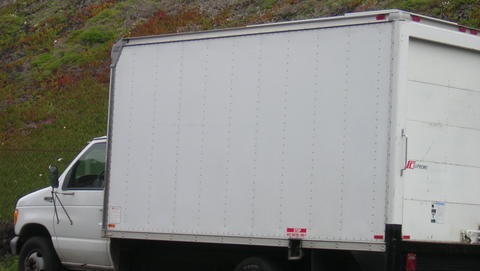
Long post, originally intended as an answer to a vandweller mailing list post. It was too long, so I decided to put it here instead.
I started vandwelling with just a vague notion that I rely on electricity and internet a lot for my work, so I knew I needed "lots" of electricity. I overdesigned and underdesigned as a result.
After some years of thrashing around, I found out that the solution was to actually MEASURE stuff. Like, with an ammeter. And then do some math. Then I can make useful decisions to make everything work right.
For example, laptops suck for vandwelling, IMHO, especially if you rely on them a lot. Mine uses 2-5amps at 12v! When I started out in my van, I was also stupid enough to hook mine up to a large-screen monitor which required an inverter, for a year. The inverter was inefficient and used up current itself, as well as having somewhat low efficiency in converting 110v to 12v and then the monitor's own power supply converting it back to whatever the monitor used inside (probably 12v and 5v and 24v). Not smart.
What I learned is that netbooks and smartphones are nearly ideal for vandwelling. They hardly use any electricity and can be easily charged up off of your alternator (if you drive a lot) or a modest-size, relatively-inexpensive solar panel or genset and house batteries (if you stay local a lot).
If you use a 12v netbook, DEFINITELY get a car-adapter for it. Your batteries do not put out 12v-- they put out whatever they have left in them plus whatever is being used to charge them. Your alternator or solar charger or genset or whatever will shove 14V or more at your netbook. Mine took the abuse valiantly (probably has its own internal 12v regulator) but started making buzzing sounds when running in high-voltage situations. I got a DC-DC converter and all is well. When your batteries are low, they'll put out less than 12v. Get a DC-DC car charger/converter/adapter for the netbook that'll give it a nice regulated 12v no matter what.
Likewise, electric refrigerators are GREAT for a solar-based van setup, if you buy the super-efficient Danfoss (TruckFridge) models that only need 2A to run and only run a few hours a day, and keep your van and refrigerator insulated well enough that they hardly need to run at all. If you don't have enough charging or battery capacity, get a propane or 12v/propane/110v hybrid kind. My TruckFridge uses up 5-10Ah a day, and most of those during the day when the sun is shining bright, so they're hardly any drain on the batteries.
I had made the mistake of buying a cheap thermo-electric cooler and ran it for a few months-- it used 4A, ran half the day, and didn't even cool the food properly (only 20 degrees F below ambient). Dumb dumb dumb-- I trashed my very expensive battery array that way. This was before I'd learned to actually measure anything before deciding whether (or how) to use it. The TruckFridge works a lot better and uses less amps.
Having a separate "house" battery from your starter battery is a good idea in all cases, and essential if you are charging anything more than a smartphone. The House battery (or batteries) should be an AGM or other deep-cycle-- designed to be run down deeply over a long period of time. Starter batteries are designed to provide cold-cranking amps (to start your engine) quickly and then expect to immediately start being charged back up by the alternator. They do NOT like being deep-cycled or run down slowly over time, the plates get sulfated (ruined).
Also, make sure you match the battery size to the amount of charging power you have. Solar panels only trickle-charge a large battery array-- it depends on how many amps it generates-- though a large solar array could bulk-charge a small battery no problem. I was dumb enough to buy 400Ah of battery capacity for a solar panel array that could only generate 15A when at full sun at noon in summertime. Some simple math would show why that was moronic: how long would it take for a 15 amps to charge up a battery array cycled down only part way, say to 300Ah, which would need 100Ah to fully recharge? It can't do it in one day for sure; there aren't enough hours of full sunlight, even in summer. Also, batteries need a few hours of continuous charging EVEN AFTER THEY ARE FULLY CHARGED to stay in good condition. You don't want to let deeply-discharged batteries-- even AGM's-- sit around for days or weeks (or months or years, as I did), before hooking them up to something studly enough to fully charge them within a few hours.
It's OK to have a larger number of amp-hour capacity in your batteries than you can charge up in just a few hours of sunlight at whatever amps your panels put out, but you'd also need an AC converter or genset (or both) that'll put out enough amps to really bulk-charge your batteries should you run them down, and be able to do that a day or two after running them down. (I bought a 75A 110V converter a few years ago and finally hooked it up at the beginning this year. Dumb of me to wait so long.).
My old G1 Android phone has 1.4Ah batteries, so charging it up from completely discharged state uses only a couple amps. I don't worry about it either. My panels generate 15A in sun in summer, and at least 5A even in fog and winter. The phone is a non-issue.
Back to the original question (from the vandweller's list) about leaving the charger plugged in: best to measure it and find out. I put an ammeter on my smartphone charger and found out that it uses 0.01A (10mA) when idling; so it's not crucial that I turn it off or unplug it all the time. Likewise the charger for my netbook uses 0.01A when the netbook isn't plugged in, and the netbook itself uses the same amount, so to have my netbook on and sleeping only uses 0.02A (20mA)! So that's something I don't worry about most of the time.
However, my dual-core 64-bit laptop and the charger for it uses almost 0.5A (500mA) when the computer is TOTALLY OFF (weird, or design flaw), and can draw up to 5A when running all-out! So I rarely if ever use it anymore, and only when in full sun and my house batteries are all charged up. I don't even have the big-screen monitor hooked up anymore.
Very long answer, but figured I'd share some of this at some point, and this seemed like a good enough place to do it.
Sunday, July 10, 2011

Thursday, July 7, 2011
Productive day
I went to the car wash and pressure-washed (with soap!) my van. It looks better than it probably ever has. Fits in much more nicely in suburbia now. Maybe the neighbors will be happier with me. It was worth the $6. I may do this more often, And also I might avoid parking directly on the beach; the van gets soaked with spray and salt and gets very dirty-looking. I like it better clean.
Also, I put in two shelves at storage, one big one, and one mezzanine. I threw out 3 large garbage bags of crap I didn't need anymore. It's much more organized, so it'll be easier for me to get in there and clean up paperwork now, remove more stuff, and just be a more useful storage space.
I noticed my transmission grinding sound is back again, but only in 2nd gear. All the other gears are fine.
I also put together some trim items in the cab that I'd taken apart to get easier access for other work. It looks a lot cleaner now.
I've been really enjoying doing maintenance work lately! And home-improvement work, and even just cleaning and organizing. I like it. What's wrong with me? I was never like this, was always a creative type. Now I'm enjoying cleaning, maintaining, and organizing much more than creating.
I located my biodiesel hand-pump at storage, and it drove me crazy how dirty and rusty it is! I felt a compulsion to get a wire brush and some paint thinner out, and start cleaning it off. I had other work to do, so I put the pump in the van and I guess I can clean it off some other time.
I'm loving how my van runs now, how great it sounds. It's got a new low-end hum in its exhaust note, and feels like it has got a lot more power too.
I will very likely take a long trip on the California coast next month. I'm looking forward to it.
Also, I put in two shelves at storage, one big one, and one mezzanine. I threw out 3 large garbage bags of crap I didn't need anymore. It's much more organized, so it'll be easier for me to get in there and clean up paperwork now, remove more stuff, and just be a more useful storage space.
I noticed my transmission grinding sound is back again, but only in 2nd gear. All the other gears are fine.
I also put together some trim items in the cab that I'd taken apart to get easier access for other work. It looks a lot cleaner now.
I've been really enjoying doing maintenance work lately! And home-improvement work, and even just cleaning and organizing. I like it. What's wrong with me? I was never like this, was always a creative type. Now I'm enjoying cleaning, maintaining, and organizing much more than creating.
I located my biodiesel hand-pump at storage, and it drove me crazy how dirty and rusty it is! I felt a compulsion to get a wire brush and some paint thinner out, and start cleaning it off. I had other work to do, so I put the pump in the van and I guess I can clean it off some other time.
I'm loving how my van runs now, how great it sounds. It's got a new low-end hum in its exhaust note, and feels like it has got a lot more power too.
I will very likely take a long trip on the California coast next month. I'm looking forward to it.
Tuesday, July 5, 2011
It was empty
I went camping this weekend, and on the way back I climbed up a deserted, winding mountain road. It was fun to throw a 1-ton van around like it was a sportscar!
But as I got to the top of the hill, my transmission (under my feet) felt really really hot again! Oh no! Didn't I just change the fluid and solve that problem?
I found a flat spot near the top of the road, and checked. The transmission dipstick was bone dry! DOH! I put in a quart of fluid and kept on going. It helped a little.
When I got back into town, I checked on a flat spot again. Sure enough, still empty.
The service manual says that it takes 20 quarts! It says I was supposed to put in 14 quarts, then put in a half-pint at a time, with the engine hot and running, run it through all the gears, then check again, until it got to the fill line, which should be 20 quarts. Well, the dipstick is the fill hole, so this is a huge pain, because not only does this take forever, but it takes even longer since the dipstick tube gets coated with fluid and the reading is useless. You have to wait like an additional half hour for the fluid to drain out before the dipstick reading makes any sense.
So, I just cheated, and since there was 13.5 quarts of old fluid that came OUT of the transmission, I just put 13.5 back IN and figured that should be the same. I assumed that there just was more fluid somewhere in the system that I didn't manage to drain out when I cleaned it.
Well, I was wrong. The transmission was dangerously low all along, and I filled it dangerously low with new, clean fluid. That was not smart.
So what I've done is, the slow way: fill it with a half-pint, go drive somewhere wasting fuel to heat the thing up, find a level spot, check it, fill it with another half-pint, go do some more useless driving, then check it again, fill it again, etc.
Slow and wasteful of expensive fuel. But, it works. I've got the transmission full to about halfway up the hot fill range. I'd like to top it up a bit more, but that can wait. It does seem to run a lot better now, and the grinding sound I had for years is gone. Temperature feels fine too.
But as I got to the top of the hill, my transmission (under my feet) felt really really hot again! Oh no! Didn't I just change the fluid and solve that problem?
I found a flat spot near the top of the road, and checked. The transmission dipstick was bone dry! DOH! I put in a quart of fluid and kept on going. It helped a little.
When I got back into town, I checked on a flat spot again. Sure enough, still empty.
The service manual says that it takes 20 quarts! It says I was supposed to put in 14 quarts, then put in a half-pint at a time, with the engine hot and running, run it through all the gears, then check again, until it got to the fill line, which should be 20 quarts. Well, the dipstick is the fill hole, so this is a huge pain, because not only does this take forever, but it takes even longer since the dipstick tube gets coated with fluid and the reading is useless. You have to wait like an additional half hour for the fluid to drain out before the dipstick reading makes any sense.
So, I just cheated, and since there was 13.5 quarts of old fluid that came OUT of the transmission, I just put 13.5 back IN and figured that should be the same. I assumed that there just was more fluid somewhere in the system that I didn't manage to drain out when I cleaned it.
Well, I was wrong. The transmission was dangerously low all along, and I filled it dangerously low with new, clean fluid. That was not smart.
So what I've done is, the slow way: fill it with a half-pint, go drive somewhere wasting fuel to heat the thing up, find a level spot, check it, fill it with another half-pint, go do some more useless driving, then check it again, fill it again, etc.
Slow and wasteful of expensive fuel. But, it works. I've got the transmission full to about halfway up the hot fill range. I'd like to top it up a bit more, but that can wait. It does seem to run a lot better now, and the grinding sound I had for years is gone. Temperature feels fine too.
Thursday, June 23, 2011
Massive work completed
I just completed what is probably the most massive and productive batch of maintenance I've ever done on my van. It went very well.
The secret was to do it in recursive, repetitive steps. This is because my van is, as a friend recently put it, "a rolling booby trap". It's true. It really sucks working on this thing. It's got a huge 7.3L diesel engine squashed into an engine compartment designed for a much smaller gas engine. The engine itself is great. But getting to stuff is a nightmare. I really have to take the whole thing apart in order to get to just about anything, and there are goofy design decisions in the way at every step, plus the usual old-vehicle things like frozen bolts and deterioration.
So I learned the technique: first plan carefully, of course, and order any parts I might need in advance. Then take apart the first layer of stuff I need to remove. If necessary, fight all the rusted/frozen/stuck bolts to the death. Then reassemble (using anti-seize!). Wait, and order more parts if needed. Reaarch more. Rest. Go back and re-dismantle what I'd just put back together-- more easily thanks to the anti-sieze and practice-- and go deal with the next layer of stuff to fight. Finally I get to my objective, and I can do the work.
I was lucky enough that the rain FINALLY stopped (hopefully until fall), and even more lucky to have a safe, quiet, centrally-located, long-term parking space to use for working, two weekends in a row. The whole project took 5 days.
So I replaced my fuel pump. And.... the fuel leak is at long last gone! Getting to the fuel pump required removing the exhaust, up-pipes, and turbo, and also loosening the fuel filter housing, as well as the usual rigamarole of removing all the air intake hoses, the doghouse cover, and disconnecting two batteries under the hood and in a separate housing on the frame rail. Yeah. I had to destroy and replace four frozen bolts in order to get to this point.
While I was doing all this, I also replaced turbo pedestal o-rings, fuel supply sleeves, and fuel filter, and I cleaned off an enormous amount of fuel and dirt and melted rubber and who-knows-what-all-else from the V of the engine and all around that area. Basically, I finally made my van biodiesel-ready-- after almost 4 years of driving it on biodiesel. Every rubber object in contact with fuel (including now the diaphragm of the fuel pump) has been replaced with biodiesel-rated Viton. Yes, this is something I should have done after first buying the van, but, hey, I was pretty ignnorant, and emotionally not very healthy then either.
While I was at it, I also retrofitted an inline transmission fluid filter onto the return hose of the transmission cooler.
My headaches appear to be gone. I think it may have been the glasses all along. I probably do need bifocals, but I'd rather spend the money for that than for brain surgery, that's for sure. I have an appointment to get a CAT scan next week so we'll see what's going on for real then.
The secret was to do it in recursive, repetitive steps. This is because my van is, as a friend recently put it, "a rolling booby trap". It's true. It really sucks working on this thing. It's got a huge 7.3L diesel engine squashed into an engine compartment designed for a much smaller gas engine. The engine itself is great. But getting to stuff is a nightmare. I really have to take the whole thing apart in order to get to just about anything, and there are goofy design decisions in the way at every step, plus the usual old-vehicle things like frozen bolts and deterioration.
So I learned the technique: first plan carefully, of course, and order any parts I might need in advance. Then take apart the first layer of stuff I need to remove. If necessary, fight all the rusted/frozen/stuck bolts to the death. Then reassemble (using anti-seize!). Wait, and order more parts if needed. Reaarch more. Rest. Go back and re-dismantle what I'd just put back together-- more easily thanks to the anti-sieze and practice-- and go deal with the next layer of stuff to fight. Finally I get to my objective, and I can do the work.
I was lucky enough that the rain FINALLY stopped (hopefully until fall), and even more lucky to have a safe, quiet, centrally-located, long-term parking space to use for working, two weekends in a row. The whole project took 5 days.
So I replaced my fuel pump. And.... the fuel leak is at long last gone! Getting to the fuel pump required removing the exhaust, up-pipes, and turbo, and also loosening the fuel filter housing, as well as the usual rigamarole of removing all the air intake hoses, the doghouse cover, and disconnecting two batteries under the hood and in a separate housing on the frame rail. Yeah. I had to destroy and replace four frozen bolts in order to get to this point.
While I was doing all this, I also replaced turbo pedestal o-rings, fuel supply sleeves, and fuel filter, and I cleaned off an enormous amount of fuel and dirt and melted rubber and who-knows-what-all-else from the V of the engine and all around that area. Basically, I finally made my van biodiesel-ready-- after almost 4 years of driving it on biodiesel. Every rubber object in contact with fuel (including now the diaphragm of the fuel pump) has been replaced with biodiesel-rated Viton. Yes, this is something I should have done after first buying the van, but, hey, I was pretty ignnorant, and emotionally not very healthy then either.
While I was at it, I also retrofitted an inline transmission fluid filter onto the return hose of the transmission cooler.
My headaches appear to be gone. I think it may have been the glasses all along. I probably do need bifocals, but I'd rather spend the money for that than for brain surgery, that's for sure. I have an appointment to get a CAT scan next week so we'll see what's going on for real then.
Tuesday, June 7, 2011
The improvement continues
Life continues to get better financially, which makes life better for me in every other way possible.
Last month, I made twice as much as I spent! I successfully kept my spending down to about the mininum I've been able to keep it down to sustainably, and yet I managed somehow to make twice that much.
That's a profit. I actually made a profit. For the first time in 10 years, I made more than it costs for me to stay alive.
I cannot express in words what a relief this is. Now I just need to keep this going, every month, for the rest of my life. Well, that doesn't sound like any fun, but that's the reality. And, since it was easier this month than last month, that's encouraging.
Last month, I made twice as much as I spent! I successfully kept my spending down to about the mininum I've been able to keep it down to sustainably, and yet I managed somehow to make twice that much.
That's a profit. I actually made a profit. For the first time in 10 years, I made more than it costs for me to stay alive.
I cannot express in words what a relief this is. Now I just need to keep this going, every month, for the rest of my life. Well, that doesn't sound like any fun, but that's the reality. And, since it was easier this month than last month, that's encouraging.
Saturday, June 4, 2011
Tranny shack
I have noticed that my cab seems a lot hotter lately. I investigated and found a couple random things.
One, the exhaust pipes leading into the turbo had rusted really badly. I scraped the rust off and coated them with peanut oil. But why are they rusting so much? Is the heat coming from some problem that is causing the engine to run too hot? Cooling system is normal, but then the cooling system is SUPPOSED to keep an engine cool that is running too hot. It's still strain on the cooling system if it's running hot. But is it? And why?
Secondly, my transmission fluid level had gotten low. So I topped it up. Maybe that's where the heat is coming from? It seems a bit cooler since I topped it up. I investigated and found that I really should have changed the fluid and filter a long time ago, it's supposed to be 15K miles and I've gone past that, also didn't know when the previous owner had last done that job, if at all. And that might explain the grinding noise I hear in 2nd and 3rd too. So that's a task I've got to do, and I purchased the parts and supplies and will tackle it as soon as the rain stops. There's a leak from the rear of the transmission where it couples to the driveshaft, but that looks like it'd be a huge task to fix, so I'll leave that for later.
The fuel pump is still leaking, and I really have no excuse for not fixing that in the next few weeks, weather permitting.
Maybe my exhaust heat is coming from just having more of a lead foot lately. And, I realized as it is now June and still raining, that perhaps the rusty exhaust is simply from this being an exceptionally wet and rainy winter. More stuff to think about.
Another random van-related problem is that there are sensors which will tell me everything I need to know-- including the transmission fluid temperature, and all kinds of data-- but I can't have access to it because Ford wants $7500 for the documentation of the Mode 6 OBDII codes. Theives. There is software I could buy which would read this stuff, but it is $300. I might end up having to spring for it, just to make my diagnostics easier.
One, the exhaust pipes leading into the turbo had rusted really badly. I scraped the rust off and coated them with peanut oil. But why are they rusting so much? Is the heat coming from some problem that is causing the engine to run too hot? Cooling system is normal, but then the cooling system is SUPPOSED to keep an engine cool that is running too hot. It's still strain on the cooling system if it's running hot. But is it? And why?
Secondly, my transmission fluid level had gotten low. So I topped it up. Maybe that's where the heat is coming from? It seems a bit cooler since I topped it up. I investigated and found that I really should have changed the fluid and filter a long time ago, it's supposed to be 15K miles and I've gone past that, also didn't know when the previous owner had last done that job, if at all. And that might explain the grinding noise I hear in 2nd and 3rd too. So that's a task I've got to do, and I purchased the parts and supplies and will tackle it as soon as the rain stops. There's a leak from the rear of the transmission where it couples to the driveshaft, but that looks like it'd be a huge task to fix, so I'll leave that for later.
The fuel pump is still leaking, and I really have no excuse for not fixing that in the next few weeks, weather permitting.
Maybe my exhaust heat is coming from just having more of a lead foot lately. And, I realized as it is now June and still raining, that perhaps the rusty exhaust is simply from this being an exceptionally wet and rainy winter. More stuff to think about.
Another random van-related problem is that there are sensors which will tell me everything I need to know-- including the transmission fluid temperature, and all kinds of data-- but I can't have access to it because Ford wants $7500 for the documentation of the Mode 6 OBDII codes. Theives. There is software I could buy which would read this stuff, but it is $300. I might end up having to spring for it, just to make my diagnostics easier.
Thursday, June 2, 2011
Bolted
I am an intuitive kind of guy. I get senses, premonitions, vague musings, and then I investigate them and try to nail them down factually. This drives a friend of mine crazy-- he's very German, and the whole idea of intuition irritates him to no end. But I do have very sharp senses, and, when I do the work to follow up on them with more Germanic, deterministic, scientific kinds of techniques, the intuitions almost always turn out to be right. Usually my intuitions are driven by sounds and feelings, more than visual things.
Suddenly, I got a sense that my metal overhead cabinet lockers were not bolted on right and were going to fall down on my head. I've always heard a lot of clattering and banging around back there when I drive, but I figured it was normal. Suddenly I got a sense it was not normal, it was urgent. So I investigated, and they both seem pretty sturdy.
But while I was at it, I had a look at my wooden kitchen cabinets. And, one of them was not properly bolted in! When I put them in over a year and a half ago, I missed the hat channel (the closest thing I have to studs in the outside walls), and I guess I just figured that was good enough. They were sturdy at the time. But they were never really done right; the screws were just in the plywood, which means they weren't securely bolted in. And, from all the driving around, the metal screws had basically sawed part of the wooden plywood into sawdust, and thus worked themselves loose. The cabinet was flopping around and would have fallen down on my nice counter and sink.
So I unscrewed the screws and started drilling them back in elsewhere, feeling around for the hat channel. It was almost an inch to the right on both sides. Now that thing is in there good, and it ain't going anywhere.
Glad I followed my intuition there. Note to self: if metal isn't fastened to metal in a moving vehicle, it isn't really fastened.
Suddenly, I got a sense that my metal overhead cabinet lockers were not bolted on right and were going to fall down on my head. I've always heard a lot of clattering and banging around back there when I drive, but I figured it was normal. Suddenly I got a sense it was not normal, it was urgent. So I investigated, and they both seem pretty sturdy.
But while I was at it, I had a look at my wooden kitchen cabinets. And, one of them was not properly bolted in! When I put them in over a year and a half ago, I missed the hat channel (the closest thing I have to studs in the outside walls), and I guess I just figured that was good enough. They were sturdy at the time. But they were never really done right; the screws were just in the plywood, which means they weren't securely bolted in. And, from all the driving around, the metal screws had basically sawed part of the wooden plywood into sawdust, and thus worked themselves loose. The cabinet was flopping around and would have fallen down on my nice counter and sink.
So I unscrewed the screws and started drilling them back in elsewhere, feeling around for the hat channel. It was almost an inch to the right on both sides. Now that thing is in there good, and it ain't going anywhere.
Glad I followed my intuition there. Note to self: if metal isn't fastened to metal in a moving vehicle, it isn't really fastened.
Subscribe to:
Posts (Atom)